
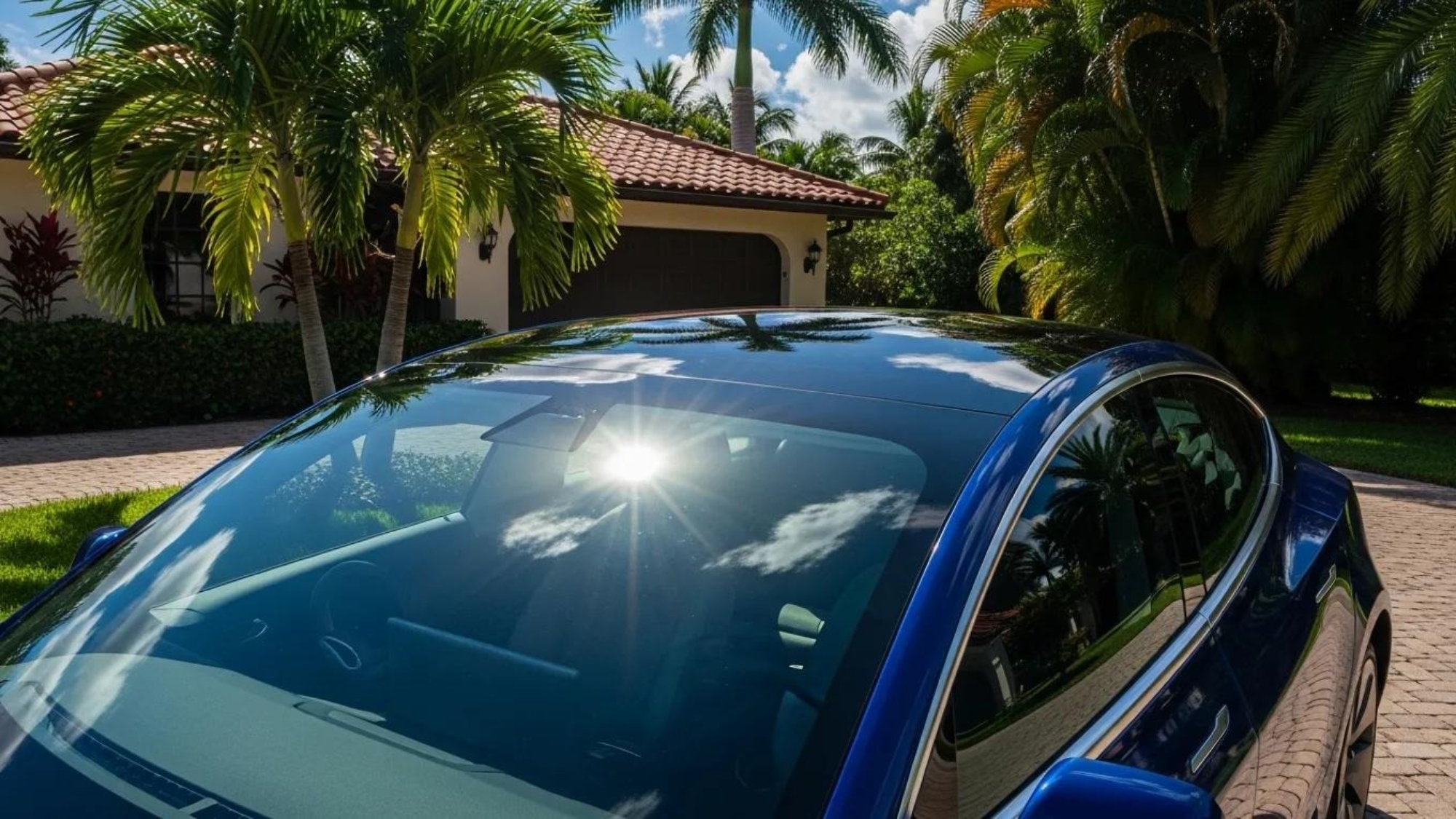
Many Tesla owners in Florida opt for glass roof tinting to improve both appearance and performance. The upgrade delivers aesthetic benefits and measurable functional gains. This guide examines the advantages, expected costs, film types, the installation process, and maintenance needs so you can decide whether tinting is right for your vehicle.
Benefits:
Glass roof tinting delivers UV protection, improved energy efficiency, refined aesthetics and reduced glare — especially useful in sunny Florida. These outcomes improve comfort and help preserve interior materials over time.
Tinting can markedly reduce the amount of heat entering the cabin, a key advantage in Florida’s warm climate. It also blocks harmful UV rays, helping prevent fading and extend the life of upholstery and trim.
Costs:
Costs depend on the chosen film and the complexity of the installation. Professional tinting typically ranges from $300 to $800, influenced by material quality and vehicle-specific requirements.
For precise pricing, contact local providers for quotes. NDPRO, a premium vehicle customization and protection company, can provide tailored estimates based on your needs.
Suitability:
Florida’s intense sunlight makes glass roof tinting a practical choice. By reducing heat and UV exposure, tinting improves cabin comfort and helps protect interior finishes — clear benefits for Tesla drivers in the region.
What Are the Key Benefits of Glass Roof Tinting for Tesla Owners in Florida?
Key benefits for Tesla owners in Florida include:
- Heat Reduction: Tinting significantly lowers the temperature inside the vehicle, making it more comfortable during hot days.
- UV Protection: High-quality tint films block up to 99% of harmful UV rays, protecting both passengers and the vehicle’s interior.
- Aesthetic Enhancements: Tinting adds a sleek, modern look to the Tesla, enhancing its overall appearance.
- Enhanced Privacy: Tinted glass provides additional privacy for passengers and belongings.
- Glare Reduction: Tinting minimizes glare from the sun, improving visibility and driving comfort.
- Potential Energy Savings: By reducing the need for air conditioning, tinting can lead to lower energy consumption.
How Does Tinting Reduce Heat and UV Exposure in Tesla Vehicles?
Tint films reflect and absorb solar energy. They block a significant share of infrared radiation responsible for heat buildup and form a barrier against UV rays that fade interiors and harm skin. Together these effects lower cabin temperatures and protect occupants and materials.
Research supports the effectiveness of solar-control glass in reducing cabin temperatures and improving EV efficiency.
Solar Control Glass Impact on EV Range & Cabin Temperature
The objective of the study was to assess the impact of a Saflex1S Series solar control PVB (polyvinyl butyral) windshield on conventional vehicle fuel economy and electric vehicle (EV) range. The test results quantified interior temperature reductions and were used to generate initial conditions for the RadTherm cooldown analysis. The vehicle simulation tool identified the potential reduction in fuel consumption or improvement in EV range between a baseline and solar control PVB configurations for the city and highway drive cycles.
Impact of solar control PVB glass on vehicle interior temperatures, air-conditioning capacity, fuel consumption, and vehicle range, 2013
In What Ways Does Tinting Enhance Comfort and Protect Tesla’s Glass Roof?
Tinting helps maintain a more stable cabin temperature and reduces reliance on air conditioning, which is especially helpful during Florida summers. The tint layer also protects the glass roof from UV-related deterioration, preserving both appearance and function.
Which Types of Window Tint Films Are Best Suited for Tesla Glass Roofs?
Common film options include ceramic, nano-ceramic and dyed films. Each offers different trade-offs in heat rejection, UV protection and visual effect.
| Tint Film Type | Heat Rejection | UV Protection | Aesthetic Appeal |
|---|---|---|---|
| Ceramic | High | 99% | Excellent |
| Nano-Ceramic | Very High | 99% | Superior |
| Dyed | Moderate | 99% | Good |
The table illustrates how different films meet specific needs, allowing you to choose a solution that balances comfort, protection and appearance.
Automotive glazing continues to evolve with innovations like smart windows that enable dynamic solar control and improved energy performance.
Smart Windows for Automotive Energy Efficiency
Smart windows – windows whose luminous and solar transmission vary dynamically to suit changing climatic conditions – have a potential application as energy-efficient automobile glazing. A variety of chromogenic technologies have been proposed. These include liquid crystal (LC) technology such as encapsulated LC devices consisting of small liquid crystal droplets encapsulated in a polymer matrix. Electrochromic (EC) technology – wher
Smart windows for automobiles, 1990
What Are the Advantages of Ceramic and Nano-Ceramic Tints for Tesla?
Ceramic and nano-ceramic films deliver superior heat rejection and reliable UV protection. Ceramic offers durability and optical clarity; nano-ceramic increases thermal performance while avoiding interference with electronic signals, which is important for modern vehicles.
How Do Different Tint Films Compare in Heat Rejection and UV Protection?
Film performance depends on composition. Ceramic and nano-ceramic films generally outperform dyed films for heat rejection and UV control. Dyed films offer basic UV protection but less thermal benefit, making them a less optimal choice for Florida’s climate.
What Does the Professional Tesla Tint Installation Process at NDPRO Involve?
NDPRO follows a controlled installation workflow: clean the glass thoroughly, measure and cut film to the roof’s dimensions, then apply the film using specialised techniques to remove bubbles and produce an even finish.
Why Is Expert Installation Critical for Tesla Glass Roof Tinting?
Expert installers know Tesla-specific challenges and ensure precise alignment and adhesion. Improper installation can cause bubbling, peeling or misalignment, which affects both appearance and performance.
How Much Does Tesla Glass Roof Tinting Cost in Delray Beach and Is It a Worthwhile Investment?
In Delray Beach, pricing varies by film choice and installation complexity, with averages between $300 and $800. Over time, the benefits—improved comfort, UV protection and preserved interior—can offset the initial cost.
What Factors Influence the Cost of Tesla Window Tinting in Florida?
Several factors can influence the cost of window tinting for Tesla vehicles in Florida:
- Type of Tint Film: Higher-quality films, such as ceramic or nano-ceramic, typically come at a premium price.
- Vehicle Size: Larger vehicles may require more material and labor, increasing the overall cost.
- Installation Complexity: Vehicles with more intricate glass shapes may require additional time and expertise for proper installation.
How Does Tinting Add Value to Tesla Ownership in Florida’s Climate?
Tinting enhances comfort and helps preserve interior materials, which can be a selling point and support resale value. The improved appearance also makes the vehicle more attractive to potential buyers.
What Are the Maintenance and Warranty Considerations for Tesla Glass Roof Tinting?
Proper care extends the life and effectiveness of tint. Clean with non-abrasive materials, avoid harsh chemicals, and review warranty terms before installation.
How Should Tesla Owners Maintain Their Window Tint for Longevity?
To maintain window tint for longevity, Tesla owners should:
- Use Soft Cloths: Clean the tinted surfaces with soft, lint-free cloths to avoid scratches.
- Avoid Harsh Chemicals: Use mild soap and water for cleaning, steering clear of ammonia-based products.
- Allow for Curing Time: After installation, avoid rolling down windows for at least 48 hours to allow the tint to cure properly.
Does Tinting Affect Tesla’s Glass Roof Warranty and What Are NDPRO’s Service Guarantees?
Tinting generally does not void Tesla’s glass roof warranty, but you should check your specific warranty terms. NDPRO provides service guarantees to ensure quality and customer satisfaction, giving Tesla owners added assurance when investing in tinting services.
For specialised solutions, visit Tesla window tinting services.
Interested in learning more? Explore our services to see how we can help you customize and protect your vehicle.
Questions or ready to schedule an appointment? Please contact us today.
Frequently Asked Questions
What is the best time of year to get glass roof tinting for my Tesla in Florida?
Schedule tinting during the cooler months, typically late fall to early spring. Cooler conditions reduce the risk that high heat will affect adhesion during installation. Installing before summer also delivers immediate comfort and UV protection benefits.
Can I remove the tint from my Tesla’s glass roof if I change my mind?
Yes. Tint can be removed, but professional removal is recommended to avoid glass damage or adhesive residue. Professionals have the tools and techniques to remove film safely; consult a trusted tinting service for the best approach.
How long does the tinting installation process take for a Tesla?
Installation typically takes between 2 and 4 hours, depending on job complexity, film type and vehicle size. Installer experience also affects duration. Ask your provider for a precise time estimate for your vehicle and chosen film.
Will tinting my Tesla’s glass roof affect visibility at night?
High-quality ceramic and nano-ceramic films preserve clarity and reduce glare, so night visibility is usually good. Very dark films can reduce low-light visibility, so choose a film that balances aesthetics with safety and consult a professional if you have concerns.
Are there any legal restrictions on window tinting in Florida?
Yes. Florida law specifies allowable tint levels for different windows. For example, the front windshield must allow more than 28% of visible light, while side windows may be darker. Confirm local regulations and consult your installer to ensure compliance.
How can I tell if my tint is of good quality?
Assess brand reputation, warranty coverage and stated UV and heat protection. Quality films typically include multi-year warranties, resist fading and bubbling, and are installed by experienced professionals using proven techniques.
What should I do if my tint starts to bubble or peel?
If your tint bubbles or peels, contact the installation service promptly. These issues often stem from improper installation or low-quality materials. A professional can evaluate whether repair or replacement is required; timely action preserves appearance and performance.
Conclusion
Glass roof tinting delivers meaningful benefits for Florida drivers: improved UV protection, better energy performance and a refined aesthetic. Choosing high-quality film and professional installation enhances comfort and helps preserve your vehicle’s interior. Contact a professional tinting service to identify the best option for your Tesla and elevate your ownership experience.
Add a Comment